
Description
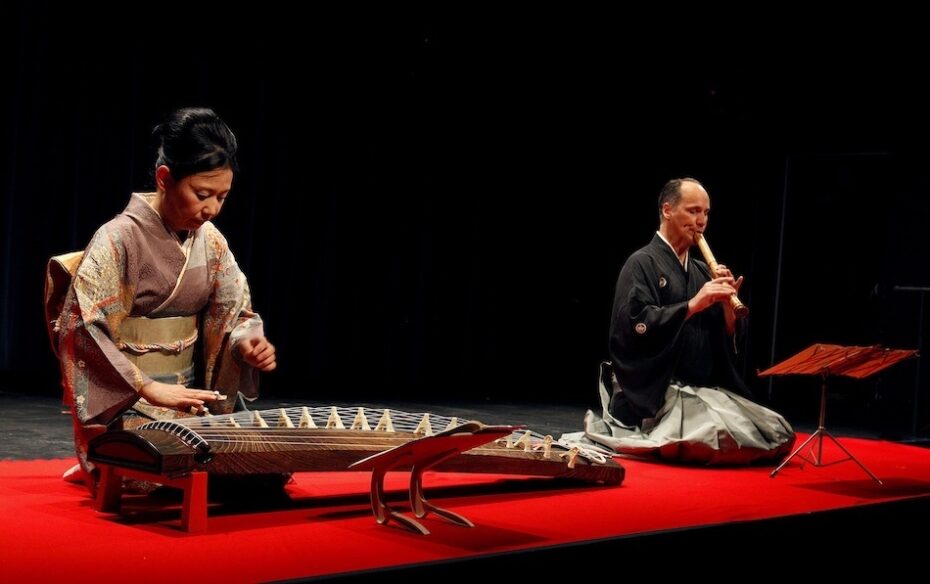
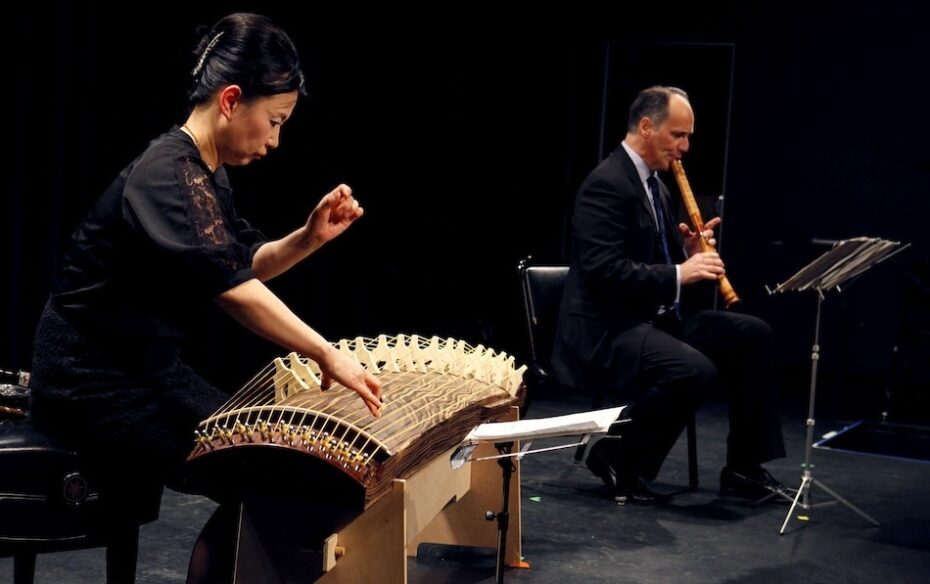
East Winds Ensemble presents two international masters — Marco Lienhard on shakuhachi and Masayo Ishigure on koto — in a luminous program of traditional and contemporary Japanese music at the Leonard Nimoy Thalia at Symphony Space, New York City.
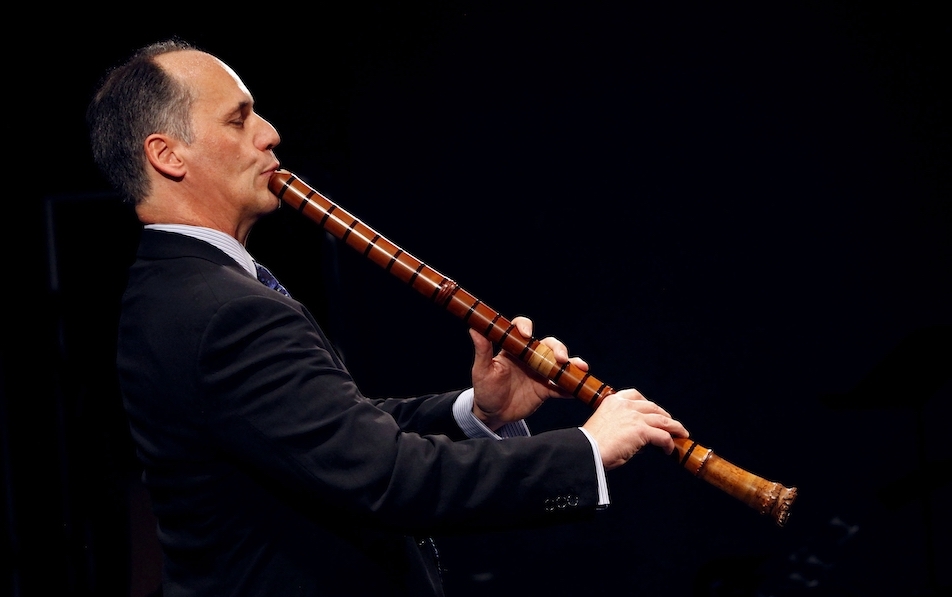
East Winds Ensemble invites New York audiences to an extraordinary evening celebrating the arrival of spring. On Thursday, May 21, 2026 at 8 PM, the Leonard Nimoy Thalia at Symphony Space will be transformed into a space of profound tranquility and musical wonder as two internationally acclaimed masters of Japanese traditional music take the stage together.Shakuhachi master Marco Lienhard and koto virtuoso Masayo Ishigure bring decades of dedicated artistry to an intimate program that spans the full breadth of Japanese musical tradition. The evening's repertoire weaves together beloved classical pieces and bold contemporary works, including Haru No Umi, Fukuda Rando melodies, Sanan, Sue no Chigiri, and more — compositions that soothe the spirit and awaken the senses in equal measure.This concert is a rare opportunity to experience two instruments of extraordinary beauty — thebreathy, meditative voice of the shakuhachi bamboo flute and the beautiful sounds of the koto— performed at the highest international level, in one of New York City beloved intimate concert venues.
ABOUT EAST WINDS ENSEMBLE
Founded in New York City in 1997, East Winds Ensemble was created with a singular mission: to present the beauty and depth of Japanese traditional music — performed on shakuhachi and koto — to audiences around the world. Over nearly three decades, the ensemble has built an extraordinary international reputation, bringing these timeless instruments to some of the world's most celebrated concert stages. Marco Lienhard and Masayo Ishigure have performed at Carnegie Hall, Lincoln Center, Boston Symphony Hall, Suntory Hall in Tokyo, and Osaka Festival Hall, among many others. Their concert tours have taken them to Japan, Mexico, Europe, Brazil — where they toured for the Japan Foundation — and across the United States, with appearances at Symphony Space New York, Salamanca Hall in Gifu, the Museum of Art of Gifu, the University of Maryland, Gettysburg College, Wesleyan College, the University of Nuevo León in Mexico, and the University of Missouri in St. Louis. The ensemble is equally celebrated in the recording world. East Winds Ensemble contributed to the soundtracks of the Nintendo game Red Steel (volumes 1 and 2) and the acclaimed film Memoirs of a Geisha. Their three best-selling CDs — featuring music of Miyazaki Hayao and Studio Ghibli arranged for koto and shakuhachi — have captivated audiences worldwide. Marco Lienhard has released several solo recordings and is a frequent invited guest at International Shakuhachi Festivals around the globe, giving master classes and concerts inBrazil, Argentina, Japan, Switzerland, France, and Russia. Taikoza.com or MarcoLienhard.com for more info.
Bio:
Marco Lienhard is the Director of Taikoza and the East Winds Ensemble, two New York City-based professional musical organizations that showcase traditional and contemporary Japanese music and performing arts through numerous concerts and educational programs. Marco is a popular music teacher and recording artist, well-known and respected as a gifted composer and solo-performing artist on the Fue, Shakuhachi, and Taiko.
Marco regularly performs as a solo artist and teaches internationally in the United States, Argentina, Brazil, Uruguay, Italy, Switzerland, and Canada. He has performed at Carnegie Hall and Madison Square Garden (New York), Suntory Hall and Osaka Festival Hall (Japan), and Tchaikovsky Hall and House of Music (Moscow), among other venues throughout the world.
Marco has composed and recorded over 20 CDs showcasing Shakuhachi, Taiko, and Fue, and his music was nominated five times for the "Just Plain Folks Awards" in 2014 and 2019 for best songs and best albums for Instrumental and Asian Music. His music can be heard on the Nintendo Wii game: "Red Steel 1 and 2". East Winds Ensemble's music has over 10 million streams on Spotify alone. He has published a book about the Shinobue (How to Learn to Play the Shinobue).
In 1995, Marco was featured as the Shakuhachi soloist during the New York City Opera's premiere of Toshiro Mayuzumi's opera "Kinkakuji. In 2015, he was the Shakuhachi soloist at the premiere of Hosokawa's "Voyage X" with the Juilliard New Music Ensemble.
Marco Lienhard lived in Japan for 18 years (1981-1998) as a member of Ondekoza, the legendary Japanese professional Taiko group, whose members were renowned for completing the Boston Marathon and then energetically playing Taiko for other runners as they crossed the finish line. During his years with Ondekoza, he mastered performing the Taiko, Fue, and Noh theater flute. He mastered the Shakuhachi with Teruo Furuya Sensei, the late Katsuya Yokoyama Sensei, who influenced him greatly with his Shakuhachi style.
Marco was Ondekoza's principal soloist on the Odaiko, Nagado, and Shakuhachi and performed over 3000 concerts. He was greatly influenced by Taiko's stage vision and presentation by Ondekoza's acclaimed Founding Director Tagayasu Den, who instigated the renaissance of Taiko and created what modern Taiko is today. From 1988 to 1989, Marco performed over 600 shows as a Shakuhachi and Odaiko soloist at the New Fujiya Hotel Reiho Theater in Atami, Japan.
From 1990 to 1993, Marco's most notable accomplishment for Ondekoza was organizing and leading a 9,000-mile, three-year run around the perimeter of the continental United States, during which the group's members, including Marco, ran the entire distance while performing Taiko in communities along the way.
Masayo Ishigure began playing the koto and jiuta shamisen at the age of five in Gifu, Japan. After initial studies with Tadao and Kazue Sawai became a special research student in 1986 at the Sawai Koto Academy of Music. The aim of the academy was to shed new light on koto music by incorporating everything from Bach to jazz and thus change the koto from being thought of only as a traditional Japanese instrument into an instrument of universal expressiveness.
Later, Masayo Ishigure became one of a small group of virtuoso disciples of the Sawais and successfully completed the 33rd Ikusei-kai program, sponsored by NHK to foster and train aspiring artists in Japanese music.
In 1988, Ms.Ishigure received a degree in Japanese Traditional Music at Takasaki Junior Arts College with a concentration on koto and shamisen. The same year she was recorded on the CD entitled "The World of Tadao Sawai". She played koto and shamisen on the educational video. In 1994, she appeared on the CD entitled "Tori no Yoni": (Flying Like a Bird) Tadao Sawai compositions.
Since arriving in New York City in 1992, Ms.Ishigure has performed at Lincoln Center, Carnegie Hall-Weill Recital Hall, BAM, Merkin Hall, Trinity Church and other venues in the New York City metropolitan area. She has performed at Harvard, Yale, Columbia, Princeton, and many other prestigious Universities and Colleges. She was a guest artist with the NY City Ballet Principal Dancer, Mr.Peter Boal, and with the San Diego Symphony Orchestra. Ms Ishigure has also performed in Hawaii, Alaska, Mexico, Russia, Belarus, and many venues throughout the United States. She has participated in music festivals in Holland, Germany, and France. Ms.Ishigure has appeared in concerts for the World Music Institute, Japan Society, Music from Japan series and Bang on a Can Festival.
She has been featured in two public television broadcasts, Music Under New York,and the World of Music. In 1997, she recorded koto music for CBS Master Work for use during the 1998 Nagano Winter Olympics. She has recorded koto music for use in several television commercials.
Since 1992, Ms.Ishigure has been teaching koto and shamisen in the music department of Wesleyan University (CT) as an artist in residence where she formed the Wesleyan Koto Ensemble. She also offers private lessons as the only Sawai Koto Academy Instructor in the New York City and Washington DC area.
In August, 2005, she will record koto music for the soundtrack of the movie "Sayuri" with Yo-Yo Ma and John Williams. She released her own solo CD "Grace" in 2001.
In 2003 she recorded "East Wind Ensemble," which featured Hayao Miyazaki's animation songs are arranged for koto and shakuhachi music.
Theatre
Leonard Nimoy Thalia